SDG 15
Mangrove tree planting program and beach conservation activities
Universiti Malaysia Perlis (UniMAP) has organized mangrove planting programs at the Pulau Ketam Forest Reserve and coastal conservation activities in Kuala Perlis—to support environmental sustainability and coastal preservation efforts. The program was held on July 5, 2025 in collaboration with the Perlis State Forestry Department and took place within the Pulau Ketam Forest Reserve area in Kuala Perlis. A total of 30 students participated in the program, assisted by four technical staff members from the South Perlis District Forest Office, who provided support and guidance regarding the planting and care of the mangrove trees. One hundred mangrove saplings of the *Bakau Kurap* species (*Rhizophora mucronata*) were successfully planted in the Pulau Ketam Forest Reserve. The activity aimed to raise awareness about the importance of mangrove ecosystems in preserving biodiversity and to serve as a mitigation measure against soil erosion and the impacts of climate change

Biodiversity Scientific Expedition Program 2025
UniMAP Sustainable Biodiversity Group led by Dr. Johan Ariff Mohtar, together with Dr. Mohd Asraf Mohamad Zainudin and Dr. Mohd Faidz Mohamad Shahimin, participated in the 2025 biodiversity scientific expedition program held at Kurong Batang and Bukit Besi Hangit Forest Reserves from 10–14 November 2025. The expedition brought together biodiversity experts from government agencies, academic institutions, and NGOs to conduct a systematic flora and fauna inventory. This participation is a continuation of the involvement of a group of researchers from UniMAP in scientific expeditions that have been conducted since 2019 organized by the Perlis State Forestry Department. The UniMAP Sustainable Biodiversity Group has conducted a study related to the biodiversity of cave spiders as one of the main research focuses. This study involves exploring and documenting the diversity of spider species that inhabit cave environments, including observations of the distribution, habitat and morphological characteristics of the species found. Continuous data collection through expeditions like this is important to increase knowledge about the biodiversity of cave ecosystems, as well as contributing to efforts to document and conserve cave biodiversity in Malaysia. Participation in the 2025 Scientific Expedition also provides an opportunity for group members to continue systematic field research and compare current findings with records and research results from previous expeditions. The data and specimens obtained are expected to contribute to the study of biodiversity and taxonomy of cave spiders, especially in understanding the diversity of spider communities and the adaptation of species to cave environments. The data will support conservation planning, permanent forest reserve management, and future research initiatives. UniMAP believes that active participation in scientific expeditions not only contributes to biodiversity knowledge development but also strengthens the university’s role in conserving the environment and the nation’s natural resources.


UniMAP offer community outreach program to support the management of land for agriculture through the UniMAP Agronexus project
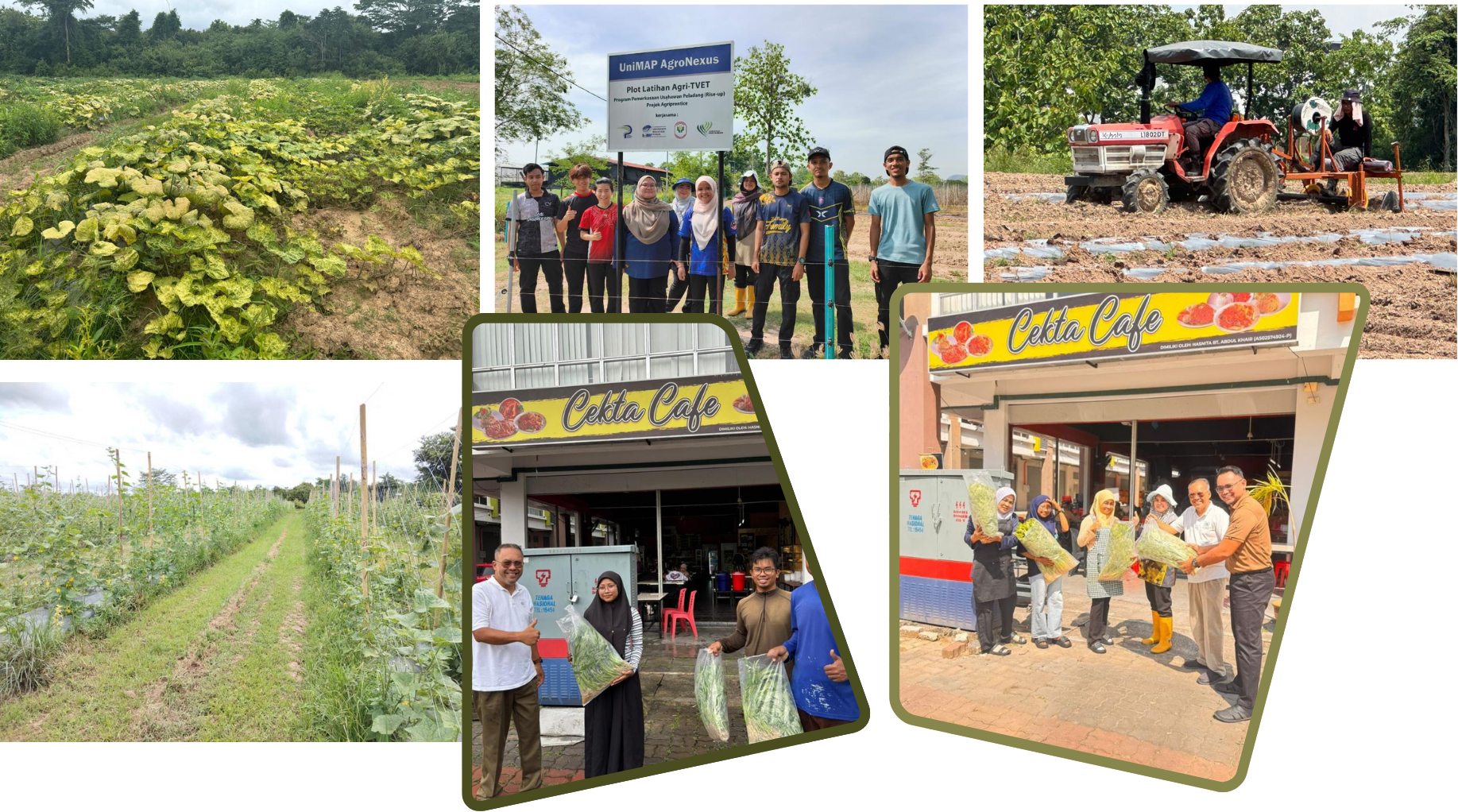
The university land development program, known as UniMAP Agronexus, is an initiative designed to optimize land use for agricultural projects that generate returns for the local community. Certain projects under this initiative are sponsored by government agencies—such as the Farmers' Organization Authority (LPP) and the Ministry of Agriculture and Food Security—with the aim of helping local farmers earn additional income. Through these agricultural projects, participants can obtain the Malaysian Skills Certificate (Level 3), which will assist them in securing better employment opportunities in the future. Beyond its economic impact on local residents, the project also contributes to national food security. Crops cultivated include bottle gourds, cucumbers, lemongrass, eggplants, watermelons, various vegetables, and chili peppers. Additionally, the project supports food sustainability on campus, as the produce is sold to cafeterias that serve UniMAP students.
Shared land ecosystem for sustainable agriculture
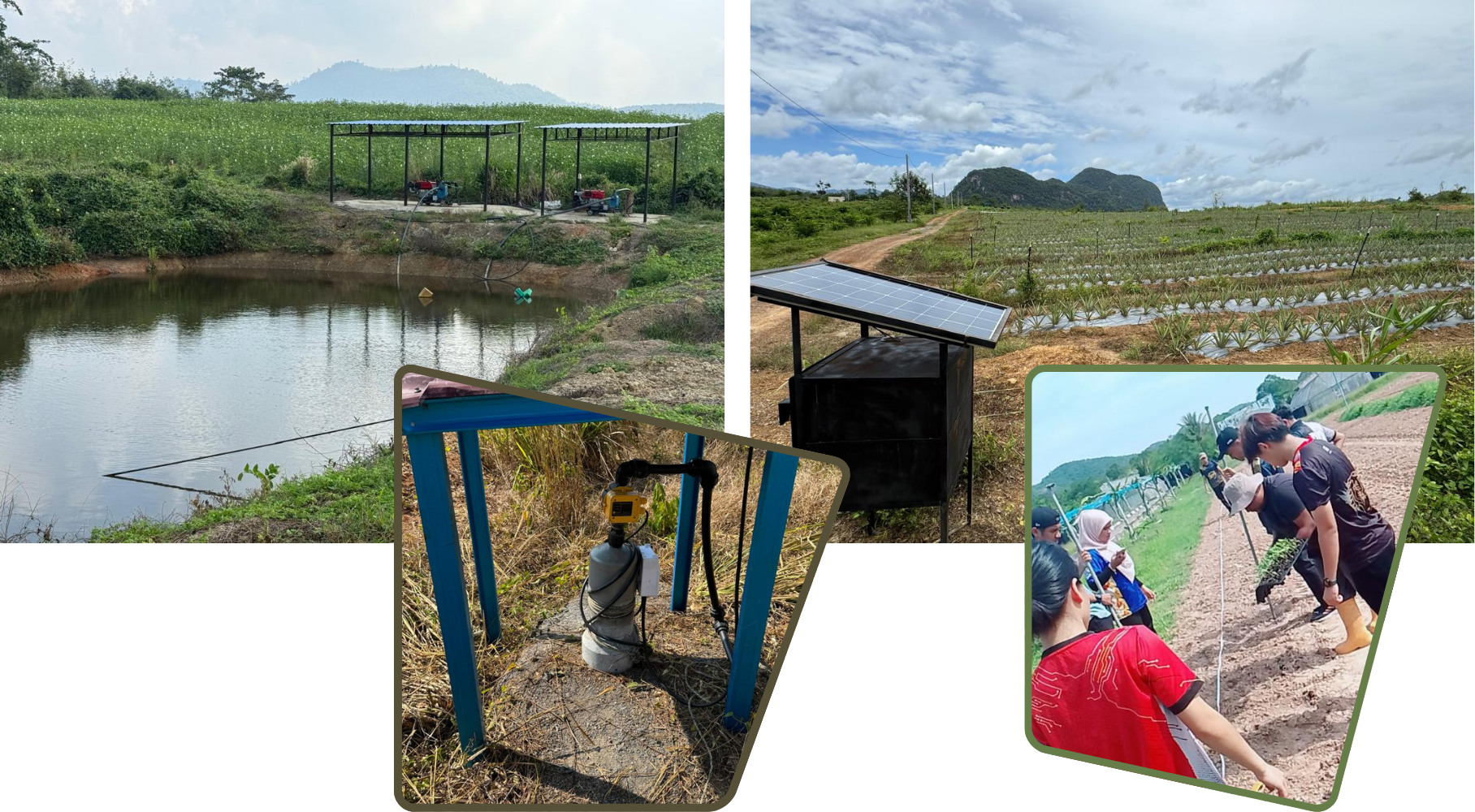
UniMAP is collaborating with the local community to develop the 55-acre UniMAP Agronexus agricultural project. Various resource-sharing initiatives have been implemented for the project, such as sharing water catchment ponds for irrigation and utilizing tube wells to access groundwater during the dry season. The university also provides machinery and technical expertise to assist the community in making this agricultural project a success.